Fine line vs traditional tattoo — which is right for you?
Fine line vs traditional tattoos: how they age, pain, style and best body zones compared. Honest guide from a Madrid fine line studio.
Fine line or traditional: an honest comparison
When someone decides to get their first tattoo, or when they already have several and want to try something new, this question almost always comes up: fine line or traditional. There's no universal answer because it depends on what you're looking for, your aesthetic and where you want it placed. This guide helps you decide with real information, nothing sold.
The key technical differences
The most important difference is in the needles. Traditional tattooing uses thicker, grouped needles that deposit more ink at greater depth. Fine line tattooing uses 1RL or 3RL cartridges, the thinnest groupings that exist, which work more superficially and with a precision that traditional tattooing doesn't aim for because it doesn't need it.
This translates into very different results. Traditional has thick, bold lines, solid black or color fills, and a strong, recognizable visual presence. It's a style with deep history and a clearly marked identity. Fine line has thin, precise lines, inkless spaces that are part of the design, and a much more discreet and minimalist aesthetic.
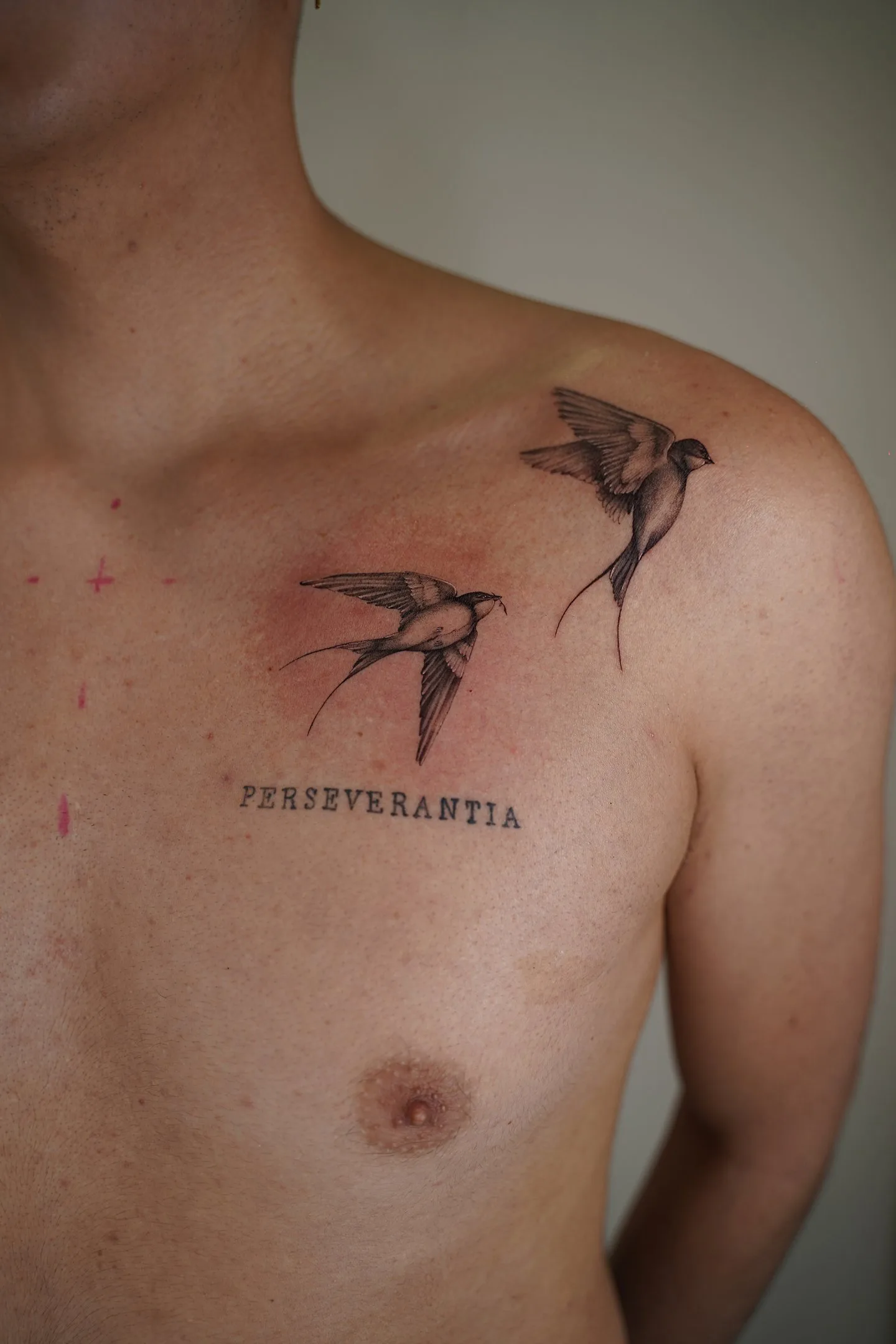
Something often overlooked: traditional tattoos also incorporate color very frequently, and that's part of their visual identity. They're styles that complement each other perfectly and many clients combine them. Someone can have traditional tattoos on one arm and choose fine line for a word on the wrist or a delicate design on the collarbone. They're not mutually exclusive — they're just different languages.
Which ages better over the years?
Both styles age well when well executed, but differently.
Traditional has more ink and thicker lines, which makes the natural fading over the years less visible. They stay recognizable and legible after decades, and that visual solidity is part of their charm.
Fine line, as we explain in other posts, starts from lines so thin that even with the natural stretching of skin over the years, the result stays clean. A traditional tattoo from twenty years ago shows lines that have widened considerably. Fine line, starting from something so thin, ages in a much cleaner and more predictable way. More on how fine line ages.
Which one hurts more?
Fine line generally hurts less. 1RL or 3RL needles are much thinner and work more superficially than traditional needles. Traditional tattooing, especially in color or solid black fill phases, generates more sensation because more ink is deposited with each pass.
That said, pain in tattoos depends much more on the body zone than on the style. A rib tattoo will hurt in both cases.
Which style suits each type of design best?
For lettering, typography, detailed flowers, minimalist geometry and small symbols, fine line is the natural choice because the precision of the stroke reproduces these elements with great fidelity.
For large designs with a lot of color, dense shadows or a strongly marked visual identity like old school, neo-traditional or Japanese, traditional is the way because those techniques are part of their essence.
What if I want something in between?
It exists, and it's very much on trend. A good example is anime-style tattooing, which has grown enormously in recent years. In these designs thick lines defining contours coexist with thin lines for internal details and dotwork for shadows and textures. The result is a hybrid style with a lot of personality that mixes the best of both worlds and generates an aesthetic very much of this moment.
If you have something like that in mind, tell us when booking and we'll assess if it's something we can do at the studio.
Frequently asked questions
- Can I convert a traditional design into fine line?
- It depends on the design. Many adapt well but it has to be assessed case by case. Write to us with your idea and we'll tell you if it's viable.
- Is fine line more expensive than traditional?
- Not necessarily. The price depends on size and session time, not style.
- Which one is recommended for a first tattoo?
- Fine line is usually the most frequent choice for first tattoos, and there's a very clear reason: it allows you to start with something small and meaningful, have the full experience of getting tattooed without it being something that takes up much space or commits too much. It's a way to enter the tattoo world calmly, and normally whoever starts this way repeats. Many people choose fine line precisely because of that: it delivers the tattoo experience in its most accessible version.
Already know which one is yours? Book from €40 on Booksy, or DM us on Instagram @sinkply for custom work. Next to Retiro Park.
— Keep reading
Tatuajes Microrealismo Madrid
Retratos, mascotas y momentos únicos reproducidos con precisión milimétrica en tamaño pequeño.
Freckle Tattoo Madrid: tatuajes tamaño peca desde 40€
Descubre los freckle tattoos o tatuajes tamaño peca en Sinkply Madrid. Diseños 1x1 cm como corazones, letras o símbolos minimalistas desde 40€.
Tatuajes pequeños personalizados en Madrid desde 40€
Hazte un tatuaje pequeño personalizado en Madrid. Mini tattoos de hasta 3 cm, palabras cortas o símbolos simples desde 40€ en Sinkply Madrid.
— Book
Ready to get inked?
— Stamp card · acumula un sello en cada visita. Full card = mini tattoo on the house.